Hillrom · Voalte Family · 0→1 Healthcare Product
Keeping families close when they can't be at the bedside.
I led the end-to-end design of a secure communication experience that let care teams send meaningful patient updates to families—without creating another channel nurses had to constantly manage.


01
Families needed reassurance. Nurses needed fewer interruptions.
When a loved one is hospitalized, not knowing what is happening creates anxiety. Families often relied on calling the unit for updates—sometimes five or six times a day.
Those calls landed on nurses already balancing patient care. The opportunity wasn't simply to create messaging. It was to give families meaningful visibility without creating another conversation nurses had to continuously monitor.
02
I designed a connected system for caregivers, families and hospital admins.
The product had to work across three very different contexts: caregivers moving quickly through hospital workflows, family members looking for clarity during an emotional moment, and hospital administrators configuring the experience behind the scenes.
Instead of treating these as separate products, I mapped the system around how access, configuration and patient updates moved between them.
HOSPITAL ADMINConfigure the experienceManage locations, settings and reusable messages
→CAREGIVERConnect + updateAdd patients and send quick, meaningful updates
→FAMILYStay informedSecurely receive patient updates away from the bedside
03
Designing for speed on the caregiver side.
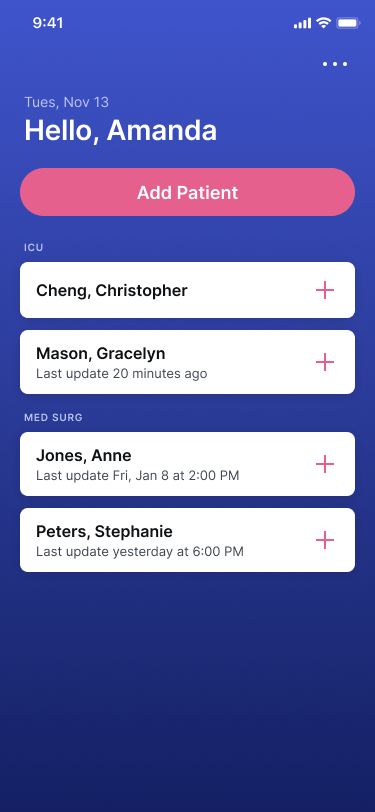
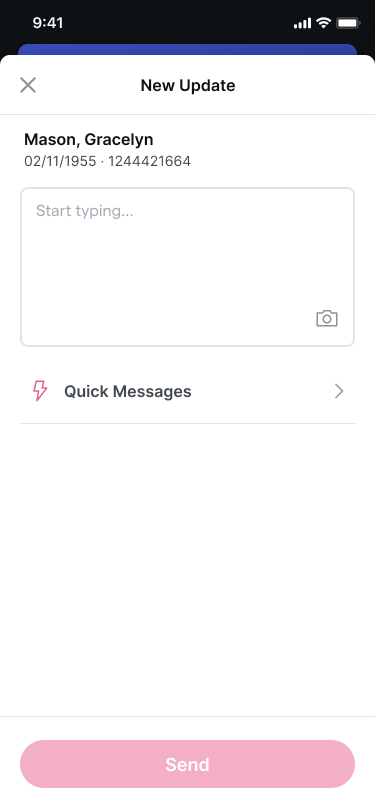
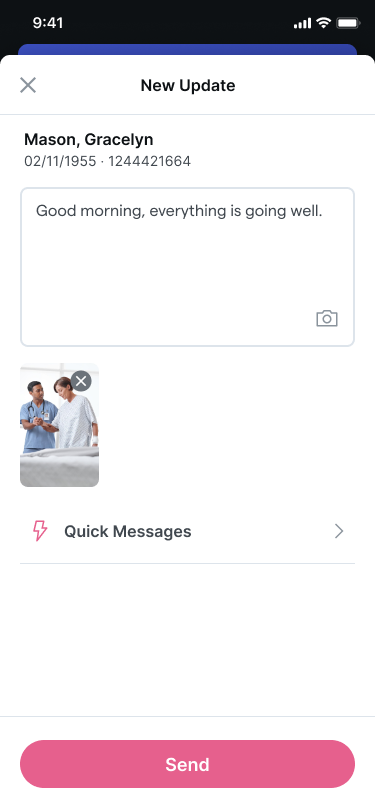
For nurses, every additional step mattered. The caregiver experience needed to fit into existing work: find a patient, invite family, choose a lightweight update, and move on.
I explored quick messages alongside freeform updates and media so common communication could stay fast while still allowing more personal moments when appropriate.
04
Giving hospitals control behind the experience.
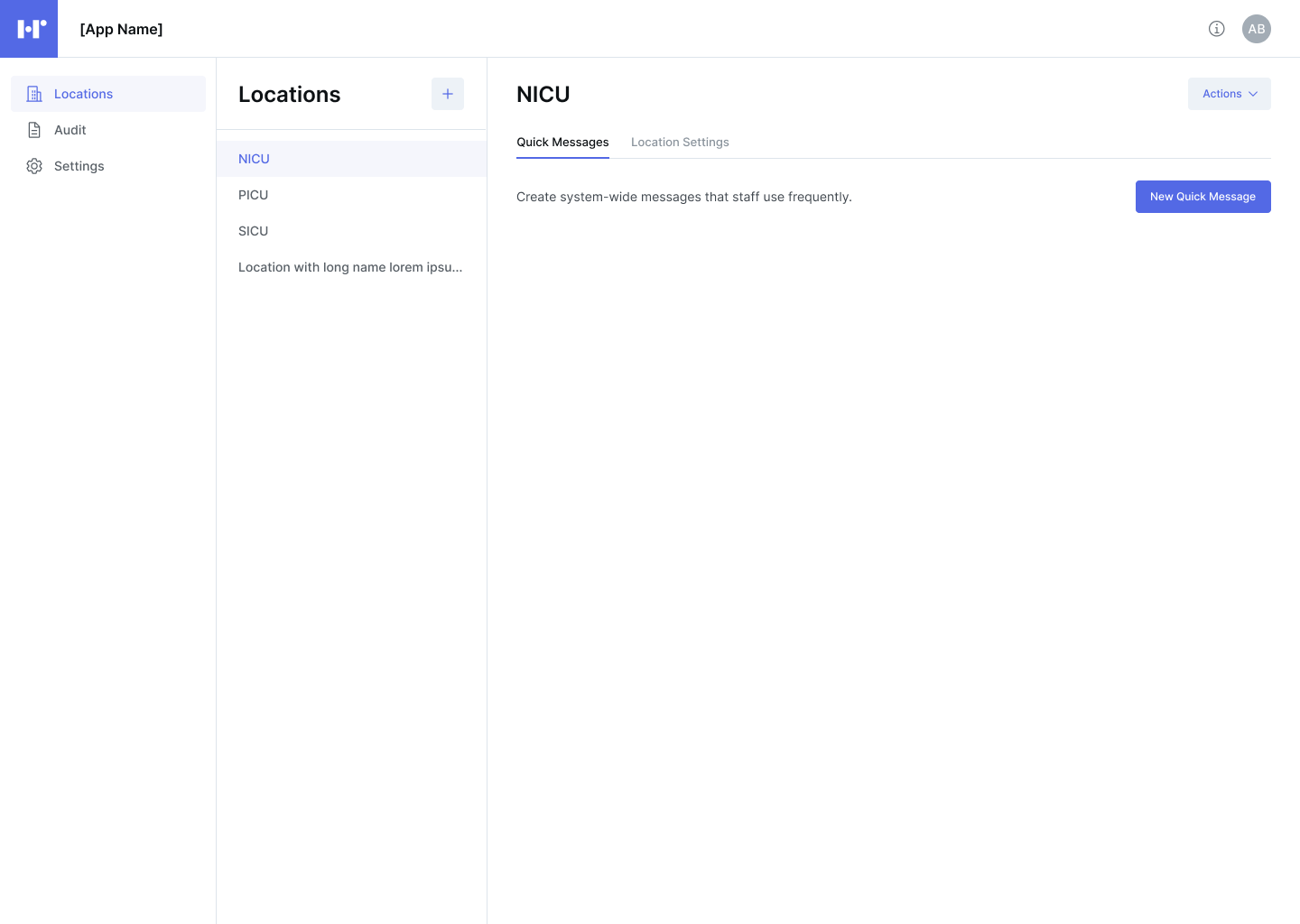
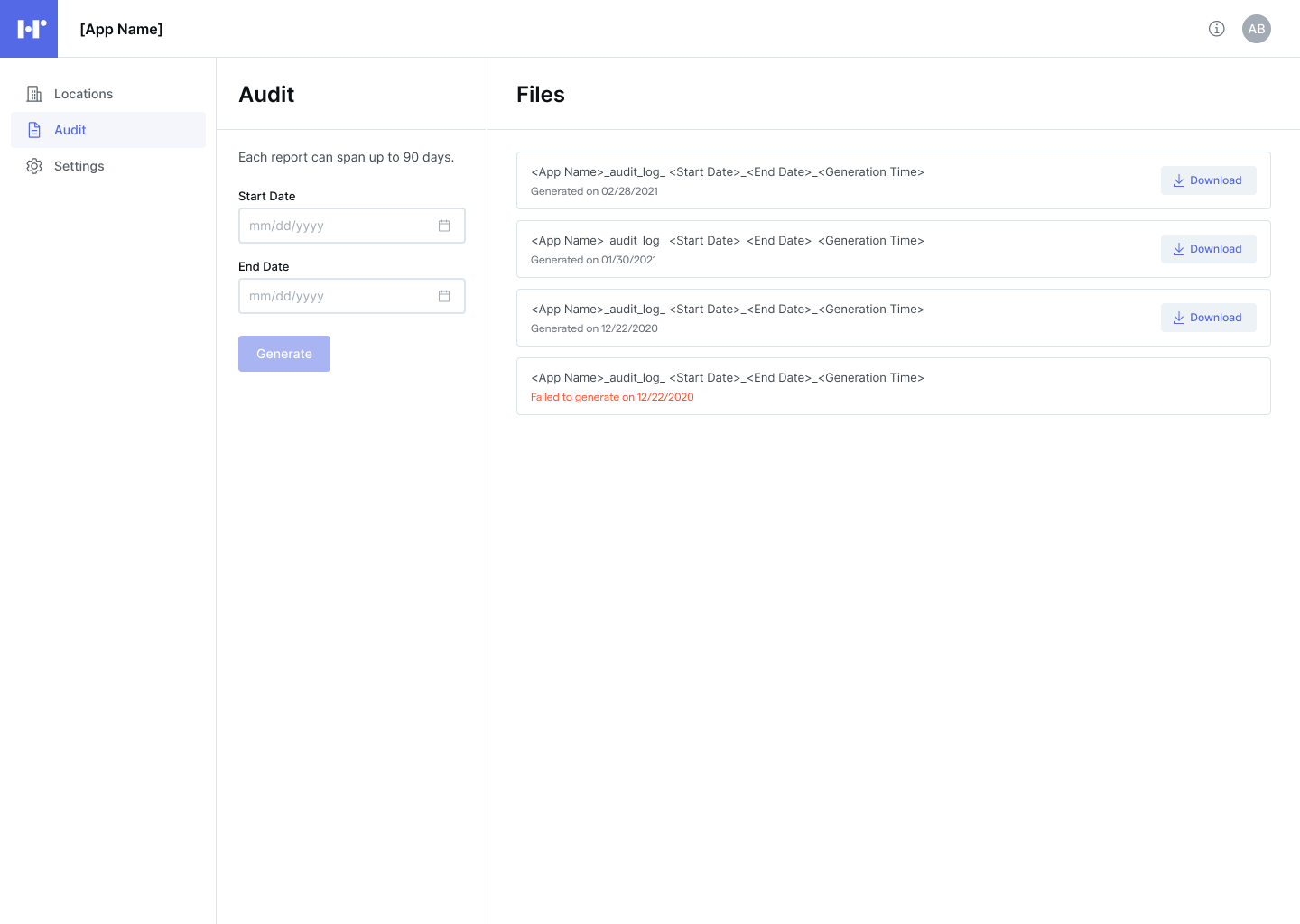
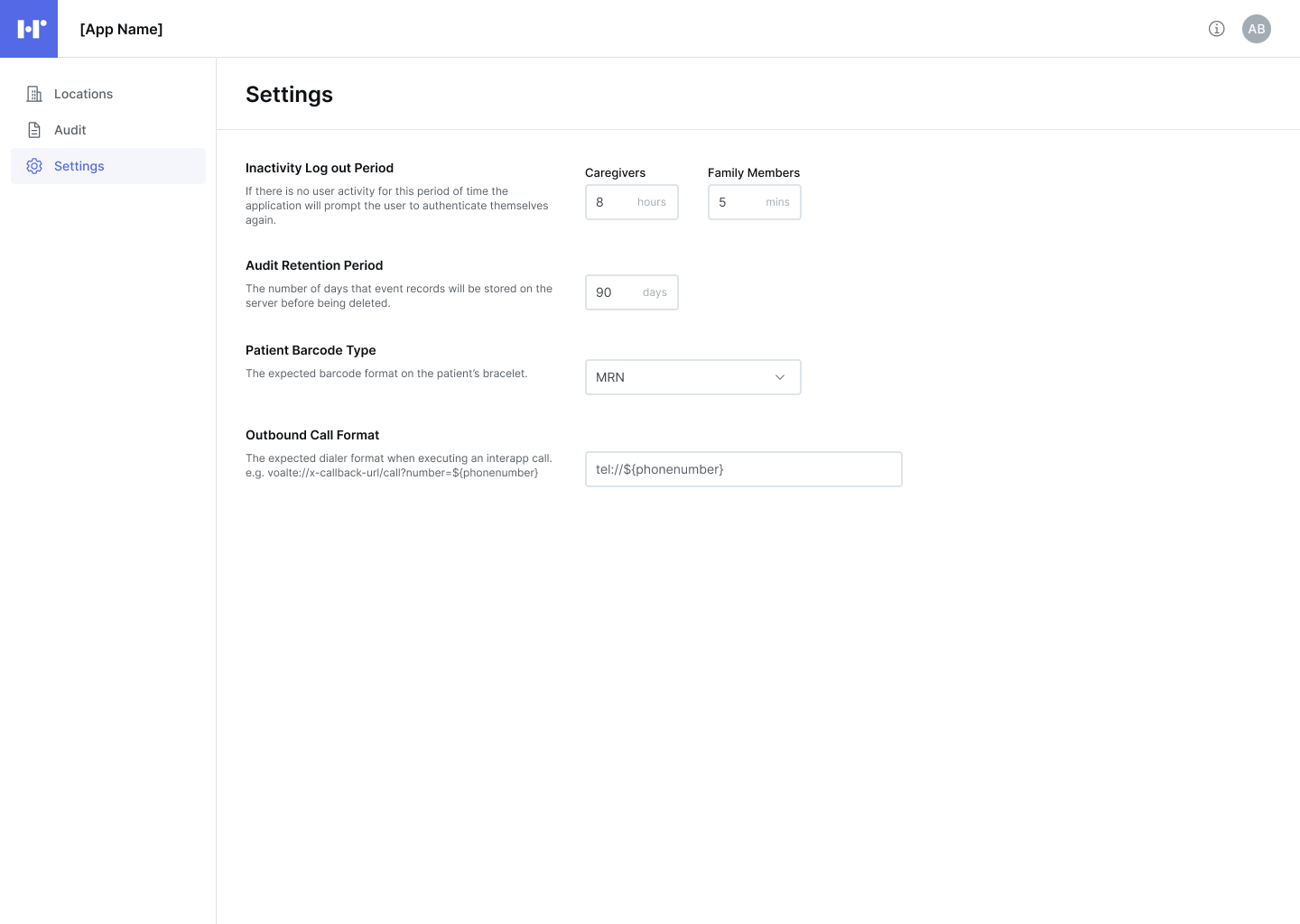
The mobile apps were only part of making Voalte Family work inside a hospital. I also designed the desktop admin portal used to configure and manage the system across locations.
Admins could manage hospital locations, create reusable quick messages for care teams, adjust system settings and generate audit reports—giving the organization control without adding complexity to the caregiver experience.
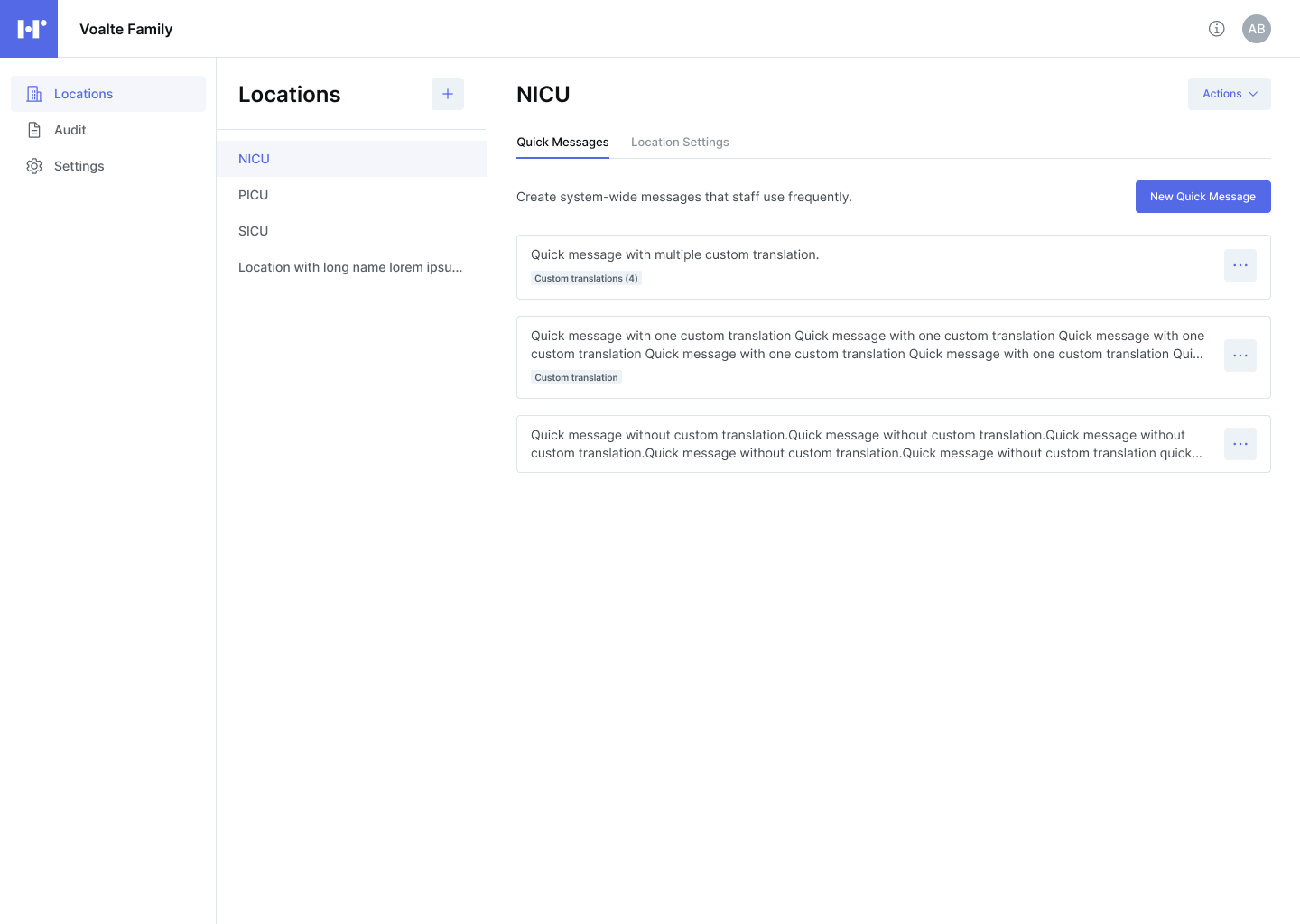
The admin portal let hospital teams configure reusable communication at the location level, supporting caregivers without asking them to recreate common updates.
05
Designing for confidence on the family side.
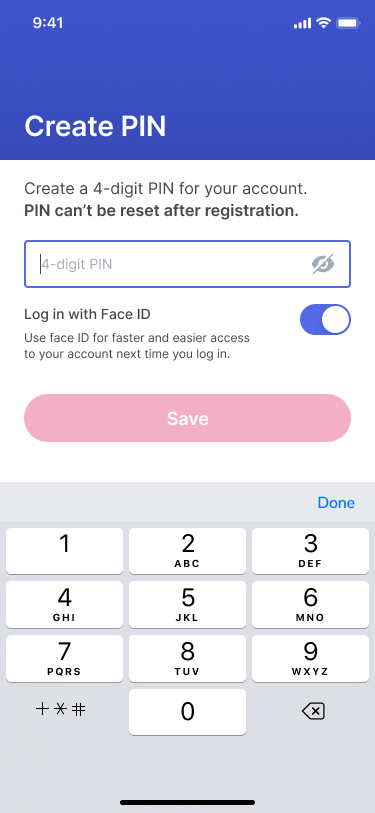
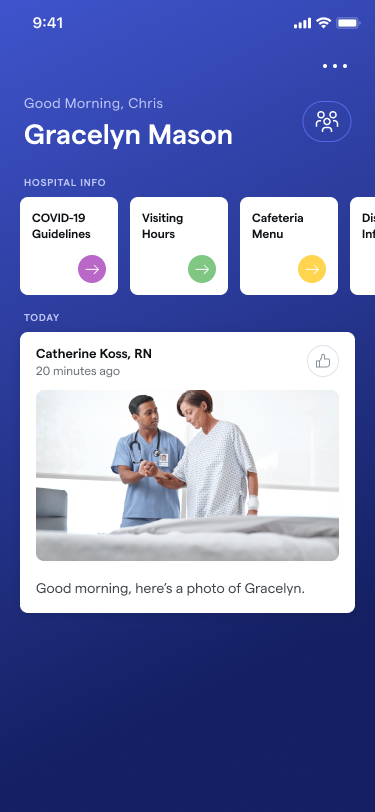
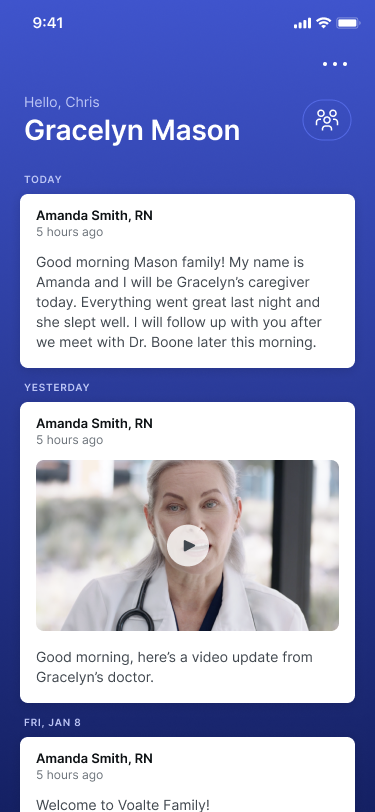
Family members were entering the experience from a completely different emotional state. The interface needed to feel simple, secure and immediately understandable.
The family experience centered the patient and created a chronological stream of updates, with secure registration and clear states for when there was—or wasn't—new information.
06
What we heard when families started using it.
The early feedback helped validate the core idea: families didn't need another place to constantly check for information. Timely updates could meet them wherever they were and reduce some of the uncertainty of waiting.
It also surfaced new needs we hadn't fully anticipated, including an accessibility benefit for a family member who found written communication easier than phone calls.
“They loved they could be down getting coffee and still get messages. They also watched the board in the waiting room and felt it gave faster updates than the board.”
“The mother has a hearing issue so talking on the phone is hard for her. She loved reading the updates.”
Written updates made information easier to access.
For one mother with hearing difficulties, receiving written updates gave her a more comfortable way to stay informed than relying on phone calls.
Families wanted small ways to respond.
Families asked for lightweight acknowledgements—like “okay” or “thank you”—and for updates to reach more than one phone. Those requests helped define future opportunities while preserving the original goal of avoiding an always-on chat burden for nurses.
07
We tested the workflow with the people who would actually use it.
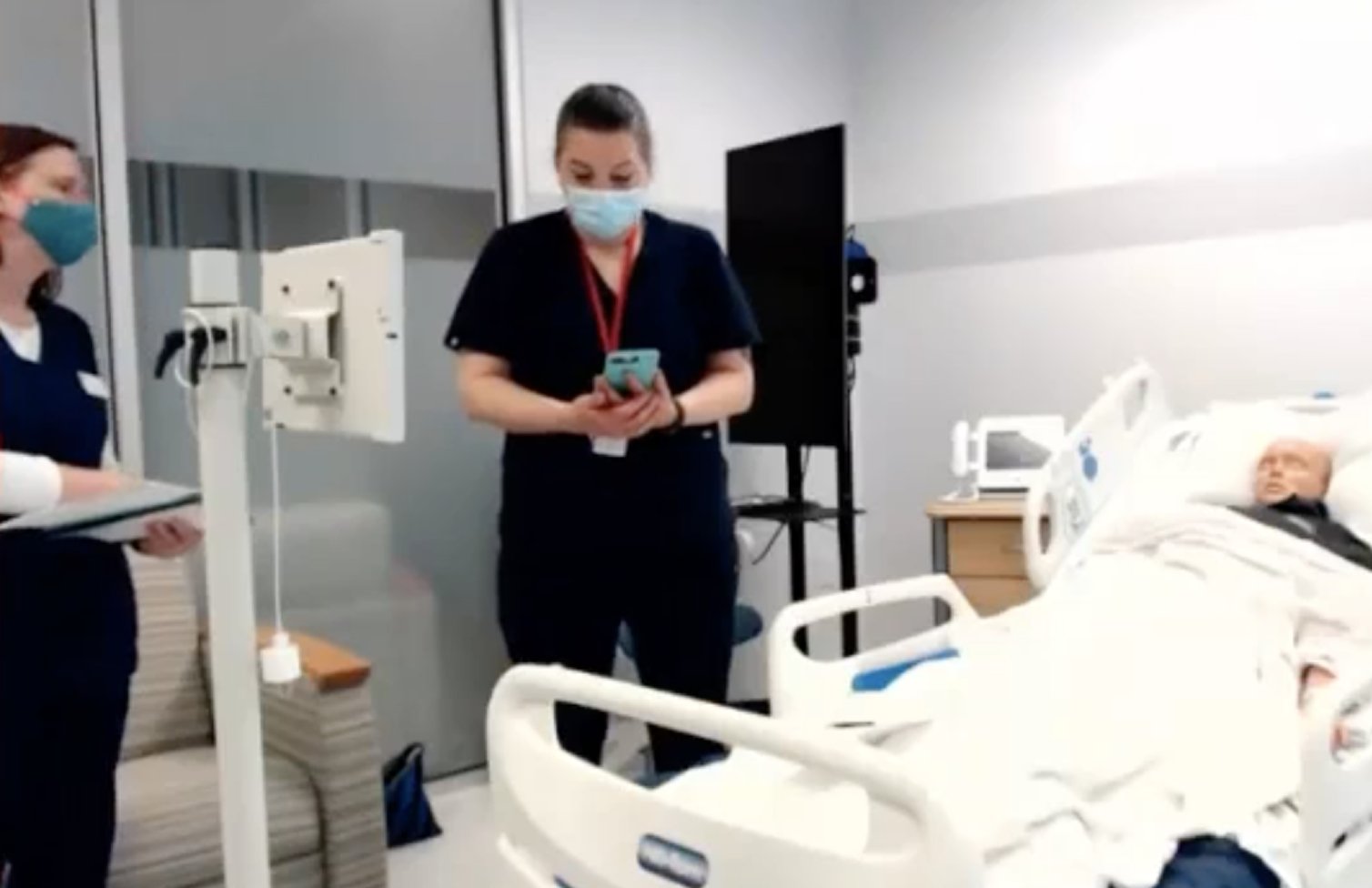
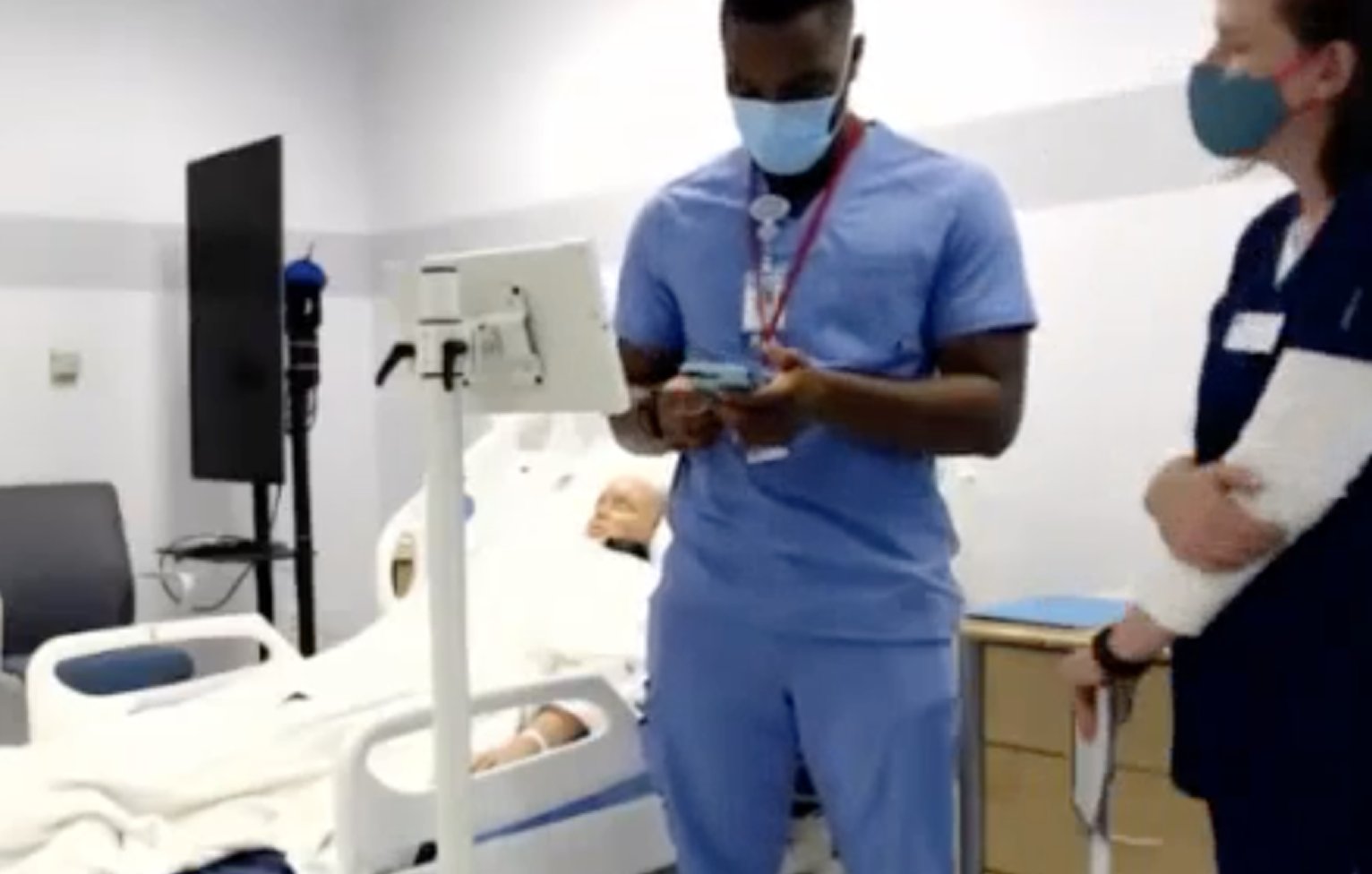
We put working prototypes in front of nurses in a simulated care environment to see whether the experience could fit naturally into the way they already worked. The goal wasn't simply usability—it was making sure family communication didn't become another task competing with patient care.
Testing helped us pressure-test the caregiver workflow before production and refine the moments where speed, clarity and confidence mattered most.
Updates had to stay lightweight.
Common communication needed to be quick enough to fit between clinical tasks, reinforcing templates and focused flows.
The workflow had to explain itself.
Scanning, verifying the patient and inviting family needed to feel like one clear sequence rather than separate administrative tasks.
Rich updates could reduce uncertainty.
Text, photos and video gave families meaningful visibility without requiring a continuous live conversation with the care team.
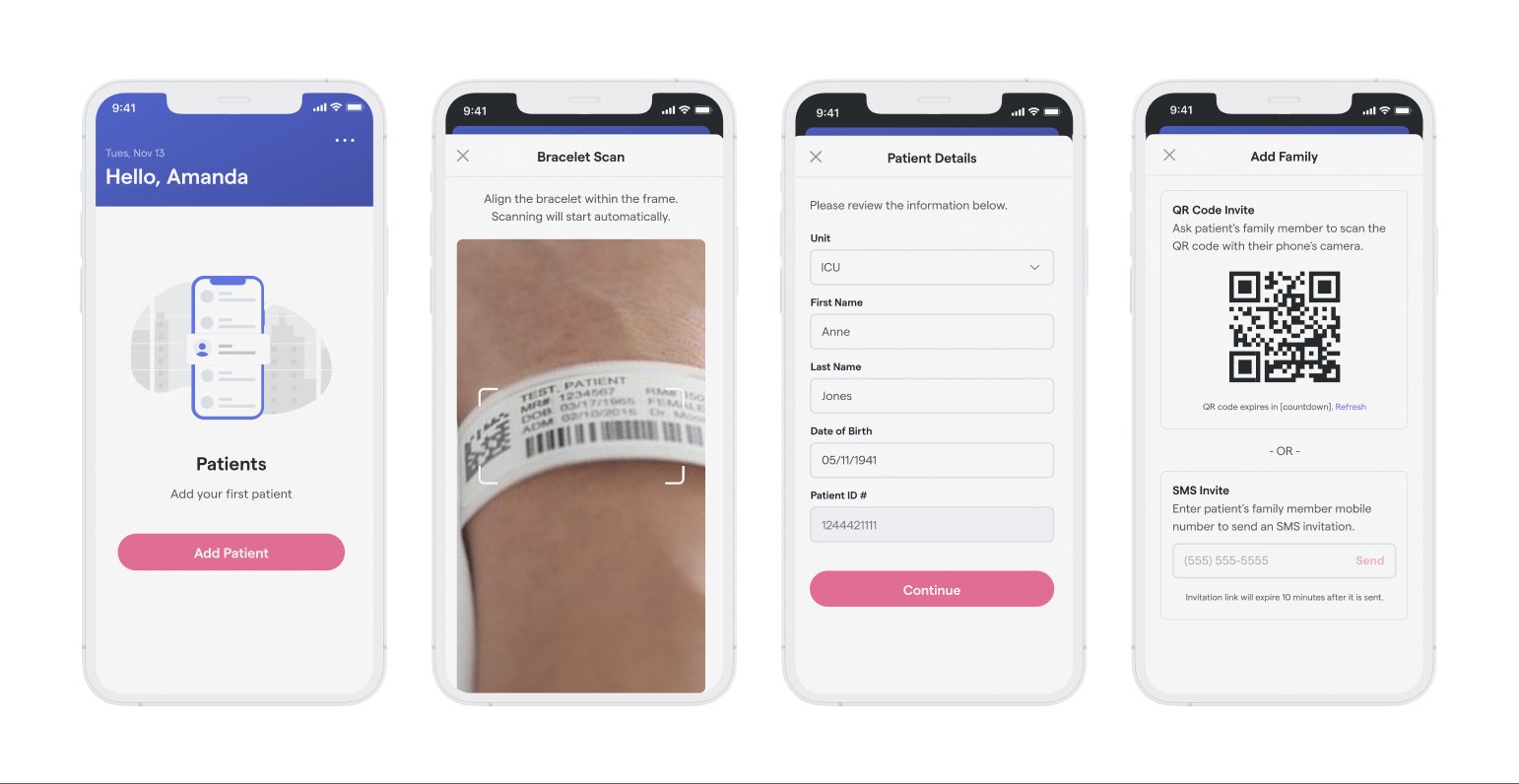
The caregiver flow was reduced to a clear sequence: add the patient, scan the bracelet, verify the record, and invite the family.
08
From tested workflow to interactive product.
As the experience matured, I designed the production states and interactions across the connected system—from onboarding a patient to sending an update and receiving it as a family member.
The prototypes made the relationship between the two experiences tangible: a few quick actions for the caregiver could become a meaningful moment of reassurance for someone away from the hospital.
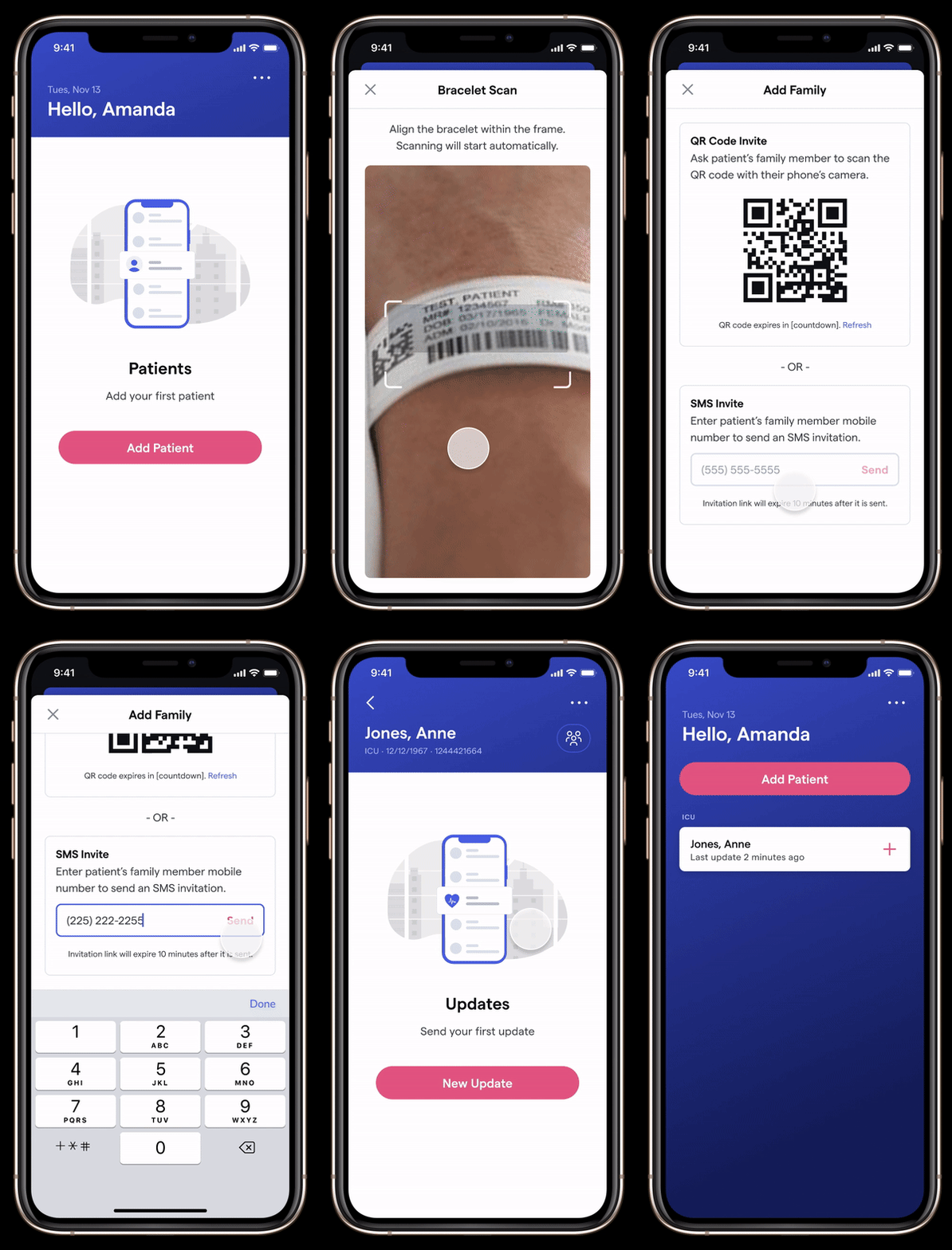
Add a patient
A guided caregiver flow connects the correct patient and family without requiring manual setup across multiple screens.
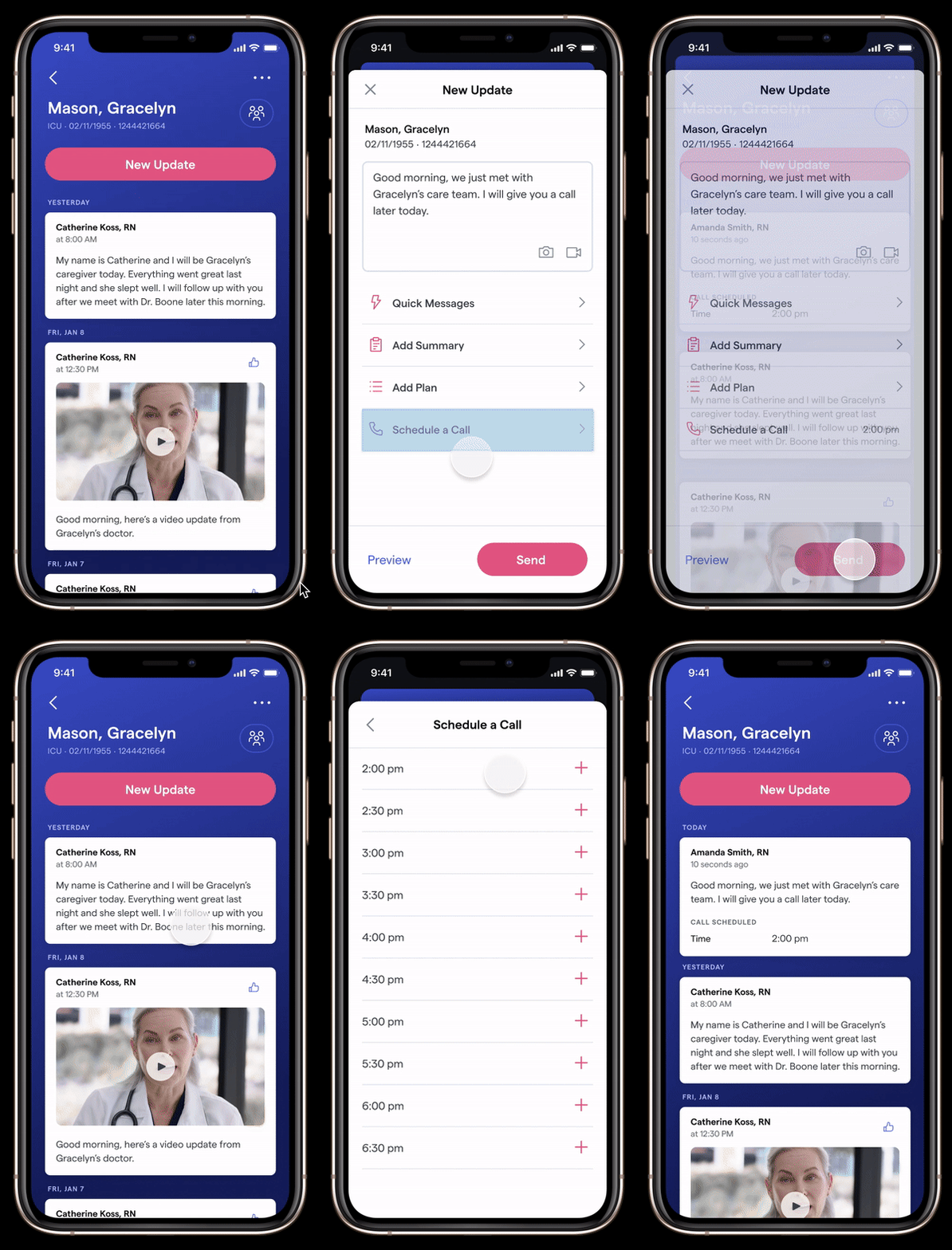
Share an update
Text, photo and video updates give families visibility into care while keeping communication asynchronous.
From concept to hospital
A 0→1 product built for real care environments.
Blessing Hospital
The product soft-launched at Blessing Hospital in Illinois, with positive early feedback.
Avera + Stanford
Additional hospital rollouts were planned as the team continued learning from the first implementation.
Three connected surfaces
A hospital admin portal, caregiver app and family app designed together as one connected communication system.
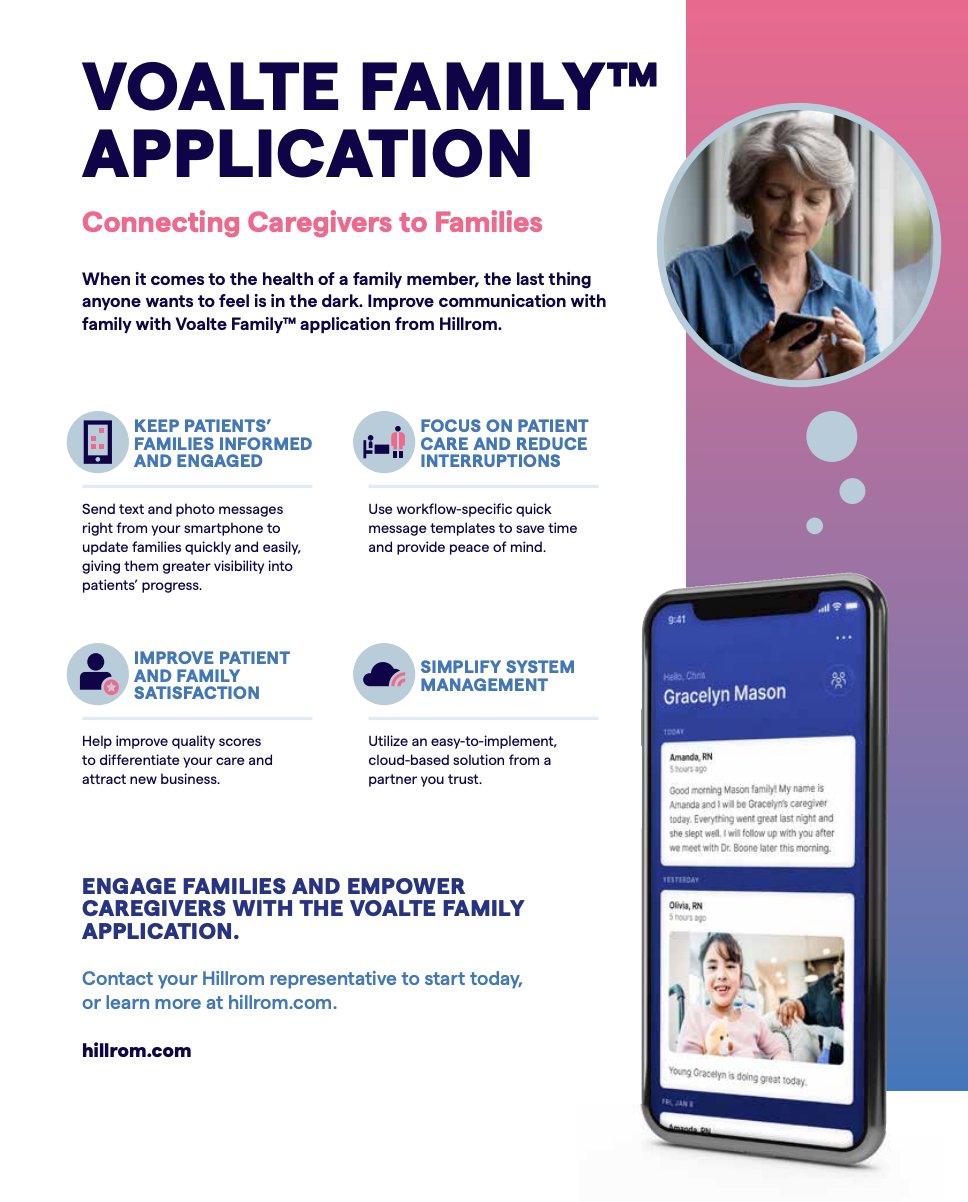
The product became part of Hillrom's offering
The same problem became the product story.
Hillrom positioned Voalte Family around keeping patients' families informed while helping caregivers stay focused on patient care and reduce interruptions—the same tension that shaped the product from the beginning.
09
Technology wasn't the point. Connection was.
The project taught me how much care has to go into designing communication in high-stakes environments. The strongest solution wasn't the one that added the most interaction—it was the one that gave families enough information to feel connected while respecting the people delivering care.
Next case study · LinkedIn →